The Demons of Discoverability
I’ve written before about the problem of getting seen online. It’s a major issue and every success story such as Clash of Clans pulling in $1 million per day:
On December 21, it hit a new high: Supercell’s two games are now bringing in more revenue than all of EA’s 969 games combined, according to App Annie.
(Wow!) For for each of those stories here are many, many times more stories of gloom among developers. Take this comment I saw posted on LinkedIn on a gamedev forum:
I developed an Indie game with XNA for Windows Phone, I have done a lot of code with this technology and I consider that my game is really good, even it’s not very original.
I published my game on windows phone market to the lowest price. Almost two months later I got only 2 sells.
After a lot of work, to me, this is the end of my indies projects.
Its a shame to hear that, I know what it is like to pour all your life and time into a project. There is an article on Games Brief that puts some new numbers to that:
As the marketplace for mobile and casual games has become larger and ever more crowded, it has become increasingly difficult for publishers and developers to get their games noticed and overcome a growing discovery problem. For just the month of March 2013, Xylogic counted almost 31,000 new iPhone apps and over 22,000 new Android apps in the US app stores alone. (Of these new apps, 18% and 22%, respectively, were games).
With 1.5M mobile apps already available in the US, and the number of game app downloads projected to grow from 21 billion in 2012 to 64.1 billion in 2017 (Juniper Research), it’s no secret or surprise that the sheer volume of different games that makes it hard to attract attention from consumers.
So that means that in March 2013 there were 1000 apps per day released. Of those 180 were games. On Android 709 apps per day released of which 155 were games. Over the two platforms 335 games were released. So what is the fate of these games? Most are destined to die in penury: From these stats, 251 will make less than $3000. From these stats 221 will not see a single download.
It’s a tough market and it’s going to get worse. One of the big issues in addition to this is that it’s not like quality alone is what separates the games that makes some money from those that don’t. I’m betting that plenty of the 200-plus un-downloaded apps are good games, some will even be great ones.
It’s unfortunate that producing a good game, or even a great one, is no longer enough to stand out from the crowd and be discovered by enough prospective users. Even some critically-acclaimed games go largely unnoticed by consumers – a disappointment to many in an industry that prides itself on innovation and creativity, and where the hope is that the commercial success of a game ought to correlate somewhat closely with its quality. In short, the combination of the vast number of releases and the rising cost of marketing has turned discovery into mobile gaming’s thorniest problem.
Getting players to see your game really is a major challenge, certainly one I spend a lot of time dwelling on…
State of Play Radio 4 Documentary
I was featured in a recent Radio 4 Documentary, State of Play. This was about how games can use used to try and achieve social change. If you want to have a listen, the documentary is here.
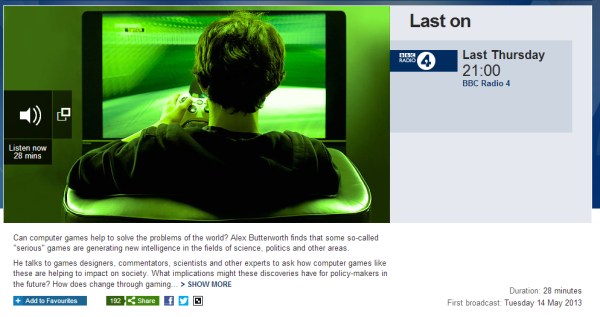
We talked about a couple of games as part of this doc. One was Endgame:Syria…
…and the other was the newly released NarcoGuerra:
New York! New York! Speaking at Games for Change
Very, very excited to say that @DebbieCo and I from Auroch Digital are off to New York next month for Games for Change. We’ve been invited to take part in a panel with a fascinating bunch on people:
THE REJECTED: CENSORSHIP OF SOCIAL IMPACT GAMES
PARTICIPANTS: Ian Bogost, PHD, Alex Jansen, Clay Ewing, Tomas Rawlings
Games that tackle controversial issues have a giant chip on their shoulder: censorship. Whether a game is banned by a distributor or pulled by a sponsor, the effects can be chilling. This panel will discuss games that broached topics deemed unacceptable for consumption with a mixture of first hand accounts and perspectives on using games as means of persuasion.
I especially like the title ‘The Rejected‘ as it makes us all sound part of some cool western from the 1960s or a new-wave punk band.
But also – it’s NEW YORK! I’ve never been, but it’s one of those iconic places we know so well from our consumption of media…
Talking and Playing Endgame Syria
I was invited by a student looking at serious games to be interviewed while he played though Endgame:Syria – I thought this was a really good idea of how to explore the game, so was happy to take part. Here’s the result of that, though because I was on Skype I do sound a bit like I’m a Cylon for a lot of the interview…
Gamify BioDundee
I’m going to be speaking at BioDundee, talking about Gamify Your PhD and games and science in general.
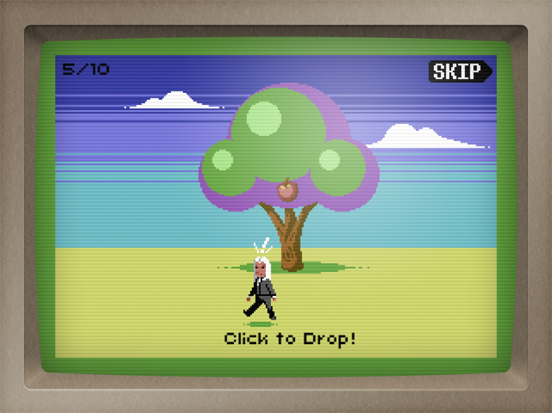
Gamify Your PhD Expereince – Newton Game
I’m doing the lunchtime talk at the PM Studio in Bristol – it’s 1pm on 17th and is free, so why not join me?
Endgame: Syria
Friday, 17 May 2013 1:00pm – 2:00pm

Tomas Rawlings, Creative Director of Auroch Digital and the GameTheNews.net project, will be joining us to talk about his company’s recent dealings with Apple, who controversially rejected their real time strategy game, Endgame Syria, an unflinching interactive exploration of events unfolding in Syria today. The game and Apple’s refusal to publish it in the app store made global headlines, from the BBC to Wired, The Guardian to Russia Today, provoking a worldwide debate about the ethics involved in using games as a way to call attention to and talk about real world issues.
GameTheNews.net has to date released Endgame:Syria on PC, Mac and Android but not on the App Store due to Apple’s apparent restrictions on allowable content in games. Tomas will tell us what really happened, what GameTheNews.net did in response and what the issues are when large platform holders have the final say about what content goes on their media channels.
Games That Let You Do Science for Real
io9 has a great article about games and science:
These kickass games let you do real-life science
Most of us would probably like to be citizen scientists, but we’re too busy — and yet we sink billions of hours into social gaming. So some savvy researchers are harnessing our love of gaming, to help advance the goals of science, using thousands of brains to sort through data. Here are eight games you can play… for science.
–
(Hat-tip to Codey for the link!)
Iterating Games to an Evolutionary Dead-End
I wrote before about how evolving fun was a key concept of how games work now in a networked environment. We are seeing this writ-large in free-to-play and other areas. While a powerful method it also has its dangers:
Evolution is efficient to the point of stupidity. Incremental change is, by its nature, about the minimum effort in to get the maximum result. Thus it moves blindly along a path bit by bit unable to see that this route may lead to strange results because by the time the mistake is realised, the energy required to change what was once minor is now so major that it is simply not evolutionarily feasible to drive the alterations needed. The Giraffe laryngeal nerve is the classic example of this. In games we will see titles that appear to be successful and yet under the bonnet have major structural or design issues that are not apparent in the current environment, but a small shift in the play-space will result in exposure of these issues and so create major upheaval out of proportion to the environmental change.
So it was with great interest that I read Tadhg Kelly’s article on The Scientism Delusion. It’s an excellent article and well worth reading the whole thing. It shows another danger of the iterative approach – that by doing what others do, you just increase the competition you face as you all head for the same green pastures:
Formulaic thinking is incredibly common in the games industry. It comes largely from an engineering mindset, which is unsurprising given how closely developing games and software have always been linked. In software every application is essentially trying to solve a problem by providing features, and over time an application builds into a suite of features that users like. And sometimes the resulting applications become so over-complicated that a new developer reinvents them for simplicity, and the cycle begins again. It almost seems scientific.
…
What I’m talking about is understanding the difference between the act of creation and the process of creation. Of course you should be iterating. Of course you should be evaluating and playtesting and trying to figure out what will make your game fun. Of course you should be looking at the market and trying to find the right approach to get where you want to be. But the thing you should not be doing is following others’ successes to the letter on the cod-understanding that that constitutes a scientific approach. All it is is a fearful approach.
All creative industries exist in a tension of seeking the formula that works, as creativity is inherently risky, yet is doomed to fail in finding this formula, because creativity is inherently risky. See this example from theatre to see what I mean.
Video: Dawkins’s Biomorphs evolve to please us visually…
How Games Encode Values
This is a really interesting article about Mary Flanigan’s Titlfactor lab and the research they do on games. In summary, it seems that people absorb values and information better from fictional settings that are a proxy or overstatement of reality:
Values, whether community-specific or philosophical, can fit into an iterative design model so they’re continuously expressed both in the work and in the creation of it. They can appear in the reward structures, in the point of view, the narrative premise, player rewards and strategies, and in any other aspect including community of play and the context of the experience.
Truly listening to diverse players isn’t easy; “One of the things you need to do if you want to be an inclusive designer is have people play the game who aren’t like you,” she says. “Most people make games for themselves.”
“We know we can speak to certain audiences, but I’m really excited about how we can expand what we do,” Flanagan adds.
What does playful change look like? Investigating prejudice against vaccinations, Flanagan’s team made a game called Pox — as well as a zombie version — followed by a study that eventually brought a full-time social psychologist to the Tiltfactor team.
Studies of players of the games tested for systems thinking, players’ understanding about vaccination, and social perspectives on disease and ill people in particular. Groups that played the “zombie” version of the game had the best result, even though it was mechanically alike to the non-zombie version: “People’s sentiments on vaccinations changed even when faced with a ficticious disease, and people playing zombie Pox … had significant gains in systems thinking, and understood vaccinations the most.”
In other words, the zombie fiction was the only factor proven to enhance players’ interest in the game; audiences couldn’t relate to the danger of 50 year-old diseases, but understood the drama of popular zombie stories.
This is an important takeaway for designers wanting players to engage with information or experience empathy for others. “The further away a story is from one’s own lived reality, the more we can open up and identify with that person or that situation,” Flanagan says. “It seems counterintuitive, but the more outlandish the story is, the more open the player can be [to] actually absorb it.”

Tiltfactor’s Pox: The The People
Apple to Hits 50 Billion App Store Downloads
Number that are so big, they are staggering – and show how Apple have redefined the digital space:
Angry Birds, Fruit Ninja, Cut The Rope, Draw Something and Temple Run top UK’s most popular ever apps
The App Store is closing in on 50 billion downloads.
To celebrate the imminent landmark, Apple is offering the person who downloads the 50 billionth app a $10,000 App Store Gift Card. The firm is also awarding a $500 Apple Store Gift Card for the subsequent 50 users to download an app.
Impressive.


 A Great Becoming...