Reactions to Endgame:Syria (Updated!)
So we launched Endgame:Syria a few days ago. I was expecting a reaction to the game, and I can understand why some would be nervous about it. Indeed we made this video to address those concerns when we launched:
But so far the reaction has been pretty good. Here is what gameswarp.com said about it:
Endgame: Syria is a neat little game that does not deserve being shackled to a small window in the browser. The game oozes quite some quality and is actually fun to play. Players familiar with card games like Magic: The Gathering should have no problems playing this game as the rules are very much simpler here.
The subject matter for Endgame: Syria should not however be looked on from a trivialized angle; people and civilian casualties are dying everyday over in Syria. Hopefully with this unique gamification approach, it will make more people aware of what is happening today in the beleaguered country of Syria.
Which is great, as they totally get what we are trying to do. Another comment posted by a user on the Google Play store was also really great:
Wow. This game is freaking hilarious. You think you can win? Freak it. You dont win. There are no Winners in war. This game got to me and I’m not ashamed to admit it…
‘Endgame: Syria’ focuses more on informing about the problem than giving an intense gamefeeling, which makes it more a simulation or an interactive experience. This new way of using the game medium for explaining current world problems provides a new look on the possibilities of games and is promising to become a new accepted genre.
Also I was very honoured to be written about on Pocket Tactics (an ace site!) about the game:
If you remember the guest post that Red Wasp Design producer Tomas Rawlings wrote for usabout WWI battlefield medicine, then you’ll recall that Rawlings is a game designer that’s unusually fixated on the intersection between games and real life. If anybody is up for tackling the challenge of making a ludic commentary on today’s headlines, it’s him.
Also this tweet really made my day – a lecturer setting the game as a task for students and they can grab screens and report back in class – brilliant result!
And here is another twitter response…
https://twitter.com/Adam_Eckersley/status/282146927112486912
https://twitter.com/Adam_Eckersley/status/282472805088518144
So far, I’m really pleased. We are, however, still waiting on Apple’s App Store to approve the game. It’s been with them over a week now and gone into ‘extra time’ which I assume is about the subject matter; so fingers crossed!
Update! Since I wrote the optimistic words above the game was rejected due to App Store guidelines forbidding games that “solely target a specific race, culture, a real government or corporation, or any other real entity”. Apple say that Endgame:Syria, which explores a real news event and aims to show users the range of factions and peoples involved in the situation, fell into this category and so was rejected. This decision is a shame really as it makes it hard to talk about the real world. We had hoped that Apple would be more nuanced in how they applied this rule but we got a bit worried when it had been in submission for around two weeks without a decision – we then figured that because of the controversy of using the gaming medium to cover an ongoing war meant passing the game had become an issue for them. Our aim is to use games as a format to bring news to a new audience and submission processes such as this do make it a lot harder for us. I get that Apple want to make sure really offensive titles don’t pass into their store, but ours is far from that. In fact the response to the game has been broadly positive with much of the mainstream media picking up on the story. We’ll be making changes to the game and re-submitting it but it does mean we’ll have to strip some of the meaning and context from it to pass Apple’s submission process and that is not ideal.
However what has happened as a result of the objection is a huge spike in interest in what we are doing. Here is a flavour… Foreign Policy wrote a good article on the ins-and-outs of rejection:
Many people would be hard-pressed to find Syria on a map, let alone know the factions that are fighting and the outside nations that are backing them. A simple computer card game may not be deep, but when players ponder whether to play a “Saudi Support for the Rebels” or a “Rebels Assassinate Key Regime Leader” card, they are making decisions, and that is how humans learn best. Perhaps it will spur them to learn more current events, or if nothing else, they may remember a few names and places, and who is fighting who. At the least, they will learn a lot more than playing Angry Birds on an iPhone.
The Guardian ran a couple of articles about this, including a long one of the concept of news-gaming:
“What this comes down to is a problem of familiarity and convention,” [Ian Bogost] says. “When you stop to think about it, there’s really no reason to believe that film and television aren’t inappropriate media for exploring real-world issues and events. I mean, Michael Bay made a film about Pearl Harbor, even. But we’re more accustomed to non-fiction film and television because there are more examples of them. There’s also more criticism and commentary that hashes out the conventions and aesthetics of documentary, non-fiction, and dramatic televisual media.”
There was also a good review over on RockPaperShotgun and I’m pleased to see made the point that the game does break you out of any news-bubble you might be in. Plus VentureBeat made a great point about the rejection:
As games sit in the crossfire of a national debate on violence, it’s sad that a one has to cut out its meaning and context in order to gain access to a huge audience.
Wired also had a really good article on the whole thing and made these key points:
As gamers, we are generally happy to delve into historical battles such as World War II in Medal of Honor, despite the devastation, violence and death, and barely an eyelid was batted when the genre moved into modern warfare in Afghanistan and Pakistan with its latter sequels. However, delving into an ongoing conflict, where tensions are extremely high and the subject matter sensitive, is another matter entirely. With early Medal of Honor games, developers could obviously be confident in their narrative, including who was the enemy. By addressing a current civil war and its multiple factions and infinite social complexities, Endgame: Syria is not giving us any answers — it’s encouraging us to ask more questions. Not comfortable territory for most.
So yes, we’re going to re-submit and also I’m hoping to write something addressing the feedback we’ve had on the game. So watch this space!
GameTheNews Launches Endgame Syria
Our GameTheNews.net project looking at creating games from news an current affairs has launched with a game about the war in Syria, Endgame Syria. Here is the press release on the launch:
New Game Explores War in Syria
BRISTOL, UK DECEMBER 13th, 2012: Games have been growing in force as a medium but still tend to be seen as pure entertainment. That perception is being challenged by a new release that explores the war in Syria in an interactive form, titled ‘Endgame Syria’. Developed as part of the new project GameTheNews.net, creators Auroch Digital are using rapid-game development methods to build games quickly in response to real-world events. Created in a development time of two weeks, the game allows users to explore the options open to the rebels as they push the conflict to its endgame. Each choice the user makes has consequences – the types of military units deployed, the political paths trodden. Not only does each choice impact the current situation but they also affect the final outcome. While the game was made rapidly, the developers report that even over the two weeks of development, they still had to change elements to reflect events happening in the real-world. “We wanted the events and actions in the game to mirror the real situation,” the game’s designer Tomas Rawlings explained, “So while creating this experience, we were also continually looking at the news and adding or removing components to keep the content current.” Endgame Syria is free to download.
Some may think that the choice of a game as a medium for this subject is questionable, but Tomas is adamant this is not the case, “As game developers, games are a natural way for us to express our thoughts on the world around us. Games don’t have to be frivolous or lightweight; they can and do take on serious issues and open them up to new audiences.”
Objections to the medium might be an issue of understanding the form, Tomas continues, “If the word ‘game’ is troubling then we’re happy for this to be called a ‘simulation’ or an ‘interactive experience’. For us, the point is that we’re using this medium as a means to express and explore the uncertainties of this situation. A game allows you to re-explore the same territory and see how different choices play out and understand that those choices have far-reaching consequences.”
The developers say that if this game brings the issues of the war to an audience who might otherwise not have engaged with it, then the risk of making something controversial rather than playing it safe will have been worthwhile. The game free to download for Android via Google Play and is available to play on the GameTheNews.net website as a HTML5 game and also due out on iPhone, iPad and iPad Touch imminently. Full details can be found at http://bit.ly/endgamesyria.
The project was created using GameMaker Studio development technology. Game the News is supported by the University of Abertay Dundee’s Prototype Fund with additional help from the Pervasive Media Studio in Bristol.
We also launched with an article on GamesIndustry.biz looking at games, war and news:
By making Endgame Syria I hope that we’ve encouraged some people who didn’t know much about the situation in Syria, to find out more. After all, the chances are your taxes are going into this war in one form or another. We also hope that we’ve joined the ranks of other games that have been unafraid to take on serious subjects and cover them with sensitivity. If either of these are the case, then the risk of making something controversial rather than playing it safe and making games about shooting Nazis or grumpy avians will have been worthwhile.

Endgame Syria Screenshot
Cthulhu Thursday: Vote Cthulhu & More
It is time for another Cthulhu Thursday – firstly, Call of Cthulhu: The Wasted Land is up for a Readers Award on Pocket Tactics – and we’d welcome your support if you liked the game (there are lots of other great games on the list too!) – You’ve only got till tomorrow to vote!

Vote Cthulhu!
Now a few cool Cthulhu images:
Cthulhu as Santa! (Just want you want coming into your house at night…)

Cthulhu Santa (from reyenamarillo.tumblr.com)
Now this is an election poster!

(Image via partit pirata)
Plus check out this amazing 2013 Cthulhu Calendar!

2013 Calendar by John Coulthart
(Cthulhu Thursday is a dose of Mythos to brighten darken your week. More on the idea can be found here and a list of posts thus far, here. Also for more Cthulhu news, sign up to the cthulhuHQ twitter feed. Enjoy!)
The End of The Console Wars (If They Ever Existed)
Very good read on the myth and reality of the console wars...
However, dedicated games hardware is no longer the core revenue generator for games, and hasn’t been since World of Warcraft showed just how much more money games-as-service could rake in. The home consoles are still very much profitable – but it strains the imagination to suggest they compete in isolation from all the other ways people can now play games. What distinguished the home consoles more than anything was the fact they were played on the household TV. But this venerable device is no longer the de facto entertainment hub, since a tablet or laptop – hell, even a cellphone – is just as capable of delivering the media the TV always used to have a corner on. TV sales are falling, only by about 8% at the moment, but there is already a sense that the domination of the TV as an entertainment device has been challenged at the very least.
What threatens the TV is the same thing that threatens the games consoles and, for that matter, the ebook reader: the tablet computer. More specifically, Apple’s all conquering iPad tablet. You only have to look at the design of the new Wii U to know who Nintendo view as their biggest rival: Apple are hurting Nintendo most in the mobile space, but make no mistake, when the mass market for games can get their play on a device they already own, expect dedicated device sales to suffer. To give this story some key numbers, Nintendo’s Wii – putatively the winner of the last round of the Console Wars – sold 97 million units over 6 years. Apple’s iPad has sold 84 million units in just 2.5 years, and about three quarters of those people use their iPad to play games. Need more evidence that this is an issue? Even though many iPad owners also own an ebook reader, they tend to read books on their iPad. When you’re already using one device for so much, you just don’t need dedicated equipment as much.

Two Great New Apps – Check ‘Em Out!
Produced by people who are part of the lovely Bristol games community, so well worth checking out!
A Christmas Carol – Drawn & Told (Android)
A Christmas Carol – Drawn & Told
A striking audio visual app of the classic Charles Dickens A Christmas Carol. 300 pages beautifully illustrated and narrated to the highest standards. Rediscover a classic with a striking audio visual app of Charles Dickens’ masterpiece A Christmas Carol – Drawn & Told. It features the wonderful story-telling voice of Christian Rodska and is further enhanced by beautiful and haunting images from critically-acclaimed illustrator Michael Cole.

And…
Critter Fitter (iOS)
Critter Fitter
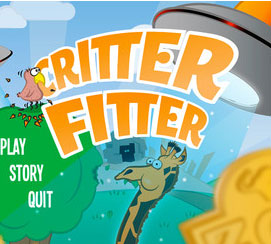
Squeeze the animals you’ve abducted into your spaceship’s cargo hold! Use your head to fit all the pesky critters into your spaceship in this puzzle game! Collect stars by solving the puzzles as quickly as possible, and unlock challenging new levels!
SpaceX Tweets Trick Rocket
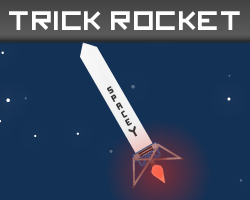
So we did another game for Wired – based on the news about SpaceX’s Grasshopper rocket tests. And SpaceX tweeted it, which is very exciting!
Trick Rocket Game – Click to find out more!
YouTube and Games vs Hollywood
This was an interesting article I read in the New York Times (link) about the growing power of two convergent trends – games and web-video:
But who needs the big screen or the flatscreen? YouTube has been increasing its original channels – highly produced videos that it finances – to lure TV viewers and advertisers by catering to niche interests like health, politics and video games. In October, Google, which owns YouTube, announced that it was adding more than 50 original channels to the 100 it introduced in the last year and expanding them to France, Germany and Britain.
“I believe that every interest will, at some point, have a channel serving that interest,” Robert Kyncl, global head of content at YouTube, told The Times. The top 25 original channels average more than a million views a week.
Machinima Prime, a YouTube channel that caters to young men who are part of gaming culture, ranked as YouTube’s number-one destination in November, reported The Times. Its live-action series, “Halo 4: Forward Unto Dawn,” has been viewed about 27 million times.
“College kids may not be bringing TVs to their dorm rooms anymore, but Machinima, because it has smartly built itself around YouTube, is right there on their laptops,” Matt Britton of MRY, a New York marketing firm, told The Times.

Halo 4 Films (from 343industries.org)
Software Design that Borrows from Biology
An interesting article of writing software that is more effective against attacks:
To combat uniformity in software, designers are now pursuinga variety of approaches that make computer systemresources moving targets. The Clean Slate project is creatingsoftware that constantly shape-shifts to elude would-beattackers.
That the Internet enables almost any computer in the world toconnect directly to any other makes it possible for an attackerwho identifies a single vulnerability to almost instantlycompromise a vast number of systems.
But Dr. Neumann notes that biological systems have multiple immune systems – not only arethere initial barriers, but a second system consisting of sentinels like T cells can detect andeliminate intruders and then remember them to provide protection in the future.
One design approach that Dr. Neumann’s team is pursuing is known as a tagged architecture.In effect, each piece of data in the experimental system must carry an encryption code thatensures that it is one that the system trusts. If the data or program’s papers are not in order,the computer won’t process them.
Winning Wellcome Trust ExPlay Game Jam Entries now Online…
All of the games from the ExPlay Wellcome Trust game jam that are able to be, are now online – including the well deserved winner:
First Prize: HIVe (Java download, video)
In HIVe the deception moves to a molecular level, where one player is a HIV infected cell disguised as a normal cell, seeking to infect other cells. The second player is an antiretroviral seeking to find and destroy the infection. The developers write, “The objective of the HIV player is to infect as many cells as possible before being caught by the antiretroviral drug player. We felt that the lifecycle of a virus is a constant battle of deception with the body and our game tries to capture this whilst at heart still being a game and being fun. We felt using HIV as the virus was important for its relation to scientific research and global social issues.”
HIVe screenshot (Wellcome Trust ExPlay Game Jam 2012)

The announcement of the winners is on the Auroch Digital site, as are the short listed games – with all the games being on the ExPlay site.
Game The News: Exploring SpaceX’s New Rocket Launch
Our latest gamified news offering is up on Wired.co.uk:
Continuing our mission to game the news, we’ve explored the story of the recent breakthrough by SpaceX. It was with great interest that we saw the video of SpaceX’s precision landing rocket taking off and landing. So we thought we’d give you the chance for a bit of precision testing of your own via our SpaceY rocket. In this news game you need to take off and collect the numbered pick-ups and then land to complete a level.
Our games for Wired.co.uk so far have been:


 A Great Becoming...