This is an episode of the animated spin-off from the hit 80s film Ghostbusters (which I love! Queued for hours in the cold to see it at the cinema). It was written by Mythos fan Michael Reaves who is a prolific sci-fi writer and also very public about his battle with Parkinsons Disease. He also c-edited the excellent Shadows Over Baker Street collection of stories.
(Cthulhu Thursday is a dose of Mythos to brighten darken your week. More on the idea can be found here and a list of posts thus far, here. Also for more Cthulhu news, sign up to the cthulhuHQ twitter feed. Enjoy!)
Stop motion Super Mario
This is just great. Puts a smile on your face!
Call of Cthulhu: The Wasted Land Interview
There is an interview with me over on Indiegames.com…
WWI was an excellent choice of period. Could you tell us a bit more about the game’s setting?
Thanks, it is an under-used period in history for not just games but film too. It is one of those moments when history changed; modern technology like machine-guns, chemical weapons and tanks emerged and yet many of the generals still thought they were fighting cavalry battles from 100 years before. In that crucible of conflict so much was learned about the emerging modern world and yet it came at a huge cost… It was also the period around which Lovecraft set some of his work; Herbert West Reanimator being key to our game but also The Temple and Dagon too.
Go check it out. I will be asking questions later.
Crossover Summit: 13th June @ Sheffield Doc/Fest.
Exploiting the Feedback Loop 13:15 / The Chapel
Tom Rawlings (Chair) / Jon Dovey (DCRC) / Kate Quilton (Channel 4)
Games like Bejeweled, Draw Something or Words with Friends are not one-off media events, but are on-going almost living entities. Being connected to the network they can collect huge amounts of data from players and so feed back to the designers which elements work and which do not. This allows them to respond, changing and improving the project in response. But while this ‘bio-media model’ clearly works for video games, can it work for filmmakers? By seeing video as data, a number of media thinkers are increasingly challenging the view that a film has to be a one off creation. Join us to find out more…
Skeletons. Jason. Fight!
Liveforfilms are doing a series of ‘Best Fight Scenes‘ which are interesting to watch. However I thought I’d single one out for additional praise. It’s the celebrated Jason & The Argonauts scene with the skeletons. The animation is by Ray Harryhausen and it is an amazing scene. Even in the age of digital 3D animation the craft and verve of the action still shine. I saw Ray speak at a Watershed event a few years back – the room was packed and when he came to the podium he got a huge round of applause that went on and on… It was a great talk too!
The Zombie-Tastic #Rebuild Game
There was a web game that I’d enjoyed; Rebuild, so I was reary happy to read about it coming to the iOS:
Zombies are rarely a sign of originality in a game, tending to signify the last gasp of a desperate developer – but Rebuild (app store, Sarah Northway, £1.99) is different. This indie title was originally a free flash game, but has now come to iOS where it deserves to be a big success. A zombie apocalypse/ FarmVille mash-up, Rebuild presents the player as leader of the last remnants of humanity following the inevitable undead uprising. Choose a look for your avatar, as well as a tool – think pistol or dog – to help determine what kind of boss you become.

Rebuild (on iOS)
So I’ve downloaded my copy and started playing it. So far so good. However I thought I’d also email some questions about the game over to fellow indie developer, Sarah Northway, who was kind enough to answer them…
Why zombies? (We faced the same issue on Call of Cthulhu!) Are they not overdone?
I know what you mean, I’m sick to death of zombies, but someone at Apple once told me they thought zombies were “perennial”. They just keep popping up, and people love to mow them down again. Rebuild was really born of my love for post-apocalyptic survivalist stories. Whether it’s 28 Days Later, The Road, or Blindness (a great movie starring Julianne Moore), for me it’s more about the people struggling to survive than what monsters they’re facing. So I picked zombies because they’re easy to explain, and the AI is easy to write. Zombies just keep moaning and advancing slowly on the closest target, right?
What I like about the game is the sense of hope it has; how much of the design was about hope (if any)?
Maybe you’re not playing on a hard enough difficulty! Kidding, kidding – yes hope, along with the idea of morale, were things that I wanted the player to think about. Life in Rebuild isn’t just about getting through the next zombie horde, you need to believe you’re actually rebuilding civilization, and that someday things will get better.
What were the challenges of going from web to iOS?
Performance was a big issue for the mobile version. I ported Rebuild using Adobe AIR, so the iOS version uses the same source code as the original Flash game. This saved me a lot of time and allowed me to further port it to Android, BlackBerry, and Kindle in a matter of days. However AIR is far less efficient than native code, so getting the graphics to run smoothly on any mobile device was a challenge.
How big is the development team for the game?
“Team Rebuild” is mostly just me, although I contracted EvilKris to help with art for the characters, attacks and ending animations. He was great to work with, although we were on opposite sides of the world then with me in San Francisco and him in Japan. But I’m a bit of a nomad and don’t really have a specific place to call home. My husband (Colin Northway, also an indie game developer) and I sold everything a couple years ago and we’ve been jaunting around the world since then. I’ve been working on Rebuild off and on during that time in places like Honduras, the Philippines, and Malta. Right now I’m living in Greece, in a small mountain town on the island of Thassos.
What has the reception been so far?
People just love it. The Flash versions have done extraordinarily well, and when I think about how many people (millions) have played my game I’m astounded. I’m also surprised with how many people who played those free browser versions are excited to buy the iOS game as well. Rebuild has been doing quite well in the iOS App Store (considering it’s never been featured!), and I owe a lot of this success to fans of the original game.
Anyway I’m now playing Rebuild and having fun on the move – and I recommend it to you, dear reader.

Rebuild (on iOS)
Games and Google Plus
I’ve been pondering Google+ recently. If you don’t know, this is Google’s most recent attempt to get into social media. The last one being Wave, which closed a couple of years ago. I was a fan of Wave and was really impressed by its technology, but it was the implementation and user-interface that seemed to let it down to me. So lessons learnt and along comes Google+ and this time the company has been using the full (and impressive) weight of its search, gmail and YouTube systems to push it. They also had a number of games companies put games into it. However 9 months on and nobody is saying much about how well it is working:
It’s been nine months since Google added games to its Google+ platform, and developers who are considering whether to get on the Google games bandwagon are surely inquiring from other devs what their experiences have been. They may find, however, that details are particularly hard to come by.
In an informal survey of a handful of Google+ developers, Gamasutra found them to be surprisingly closed-mouthed, reticent to discuss specifics – or to discuss anything at all.
So I’ve been looking around for some numbers on this from other sources and came across this article, which gives impressive numbers for Google+ but seems to suggest that the people making up those numbers are not that active:
I’ve posted nearly every day to my G+ page, and have engaged others in conversation about many a topic. My “circler” count of those following me currently sits at 13,590, dwarfing both my Facebook friends (400) and Twitter followers (1500). I no longer view Google Plus as a ghost town, that much I can say. It is not dead and doesn’t need another article delivering post-mortem remarks. That said, I still do not believe Google Plus is the social network it needs to be, nor do I believe it will ever pose a significant threat to Facebook in its current form. … Despite the fact I have over 13,000 people allegedly following my posts, I’m lucky if five or six of them share or comment on one of my articles I’ve put up. Twenty comments is a huge success. The same is true for the G+ “power users” if you look at their numbers. Turning to someone like Robert Scoble, a social media guru who has amassed 1.2 million circlers, scrolling through his recent posts he has 12, 23, 28, 15, 18 comments. Occasionally he’ll get up to a hundred or two or three on the most popular posts, but still, there seems to be a distinct lack of engagement from 99.998% of his alleged followers.
Now I should state that I’d like to see Google+ make it. If there is only one huge social media player, that is a bad thing for games developers; we need platforms to work with. Things like the Google Hangout (recently expanded) do indeed get positive feedback. Google also make amazing software; Gmail for example is stuffed full of clever ideas and potent usability features. It’s just that as yet, I don’t think Google+ has found it’s mojo, it is still too busy trying not to be Facebook.

Photos From #RPC and an Update on the Wasted Land
A few days ago I went to the RPC Germany event. This is a huge role-playing game convention with lots to do and see. I was there with Intel’s AppUp people and Red Wasp Design, showing our game Call of Cthulhu: The Wasted Land to fellow gamers. It was a great event and we were warmly received and showed the game off to lots of people and gave away lots of free codes for the game and as a result it has shot up the AppUp chart. While I was at the event I took lots of photos. Here’s a few of them:

The Wasted Land/AppUp stall at RPC

People gather to play the game at the stall.
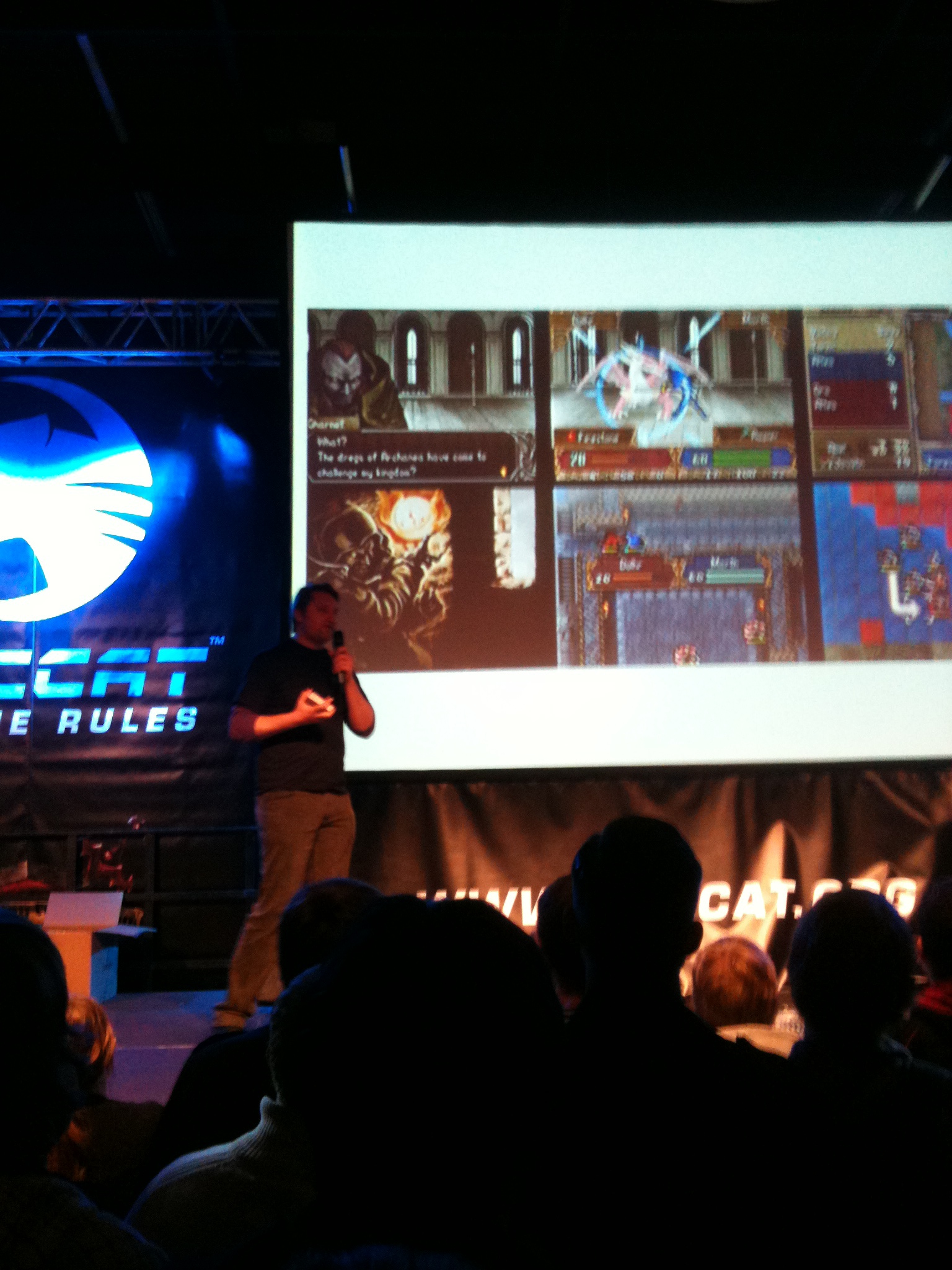
Me speaking at the RPC event about the game.

A huge pile-o-LRP-swords!
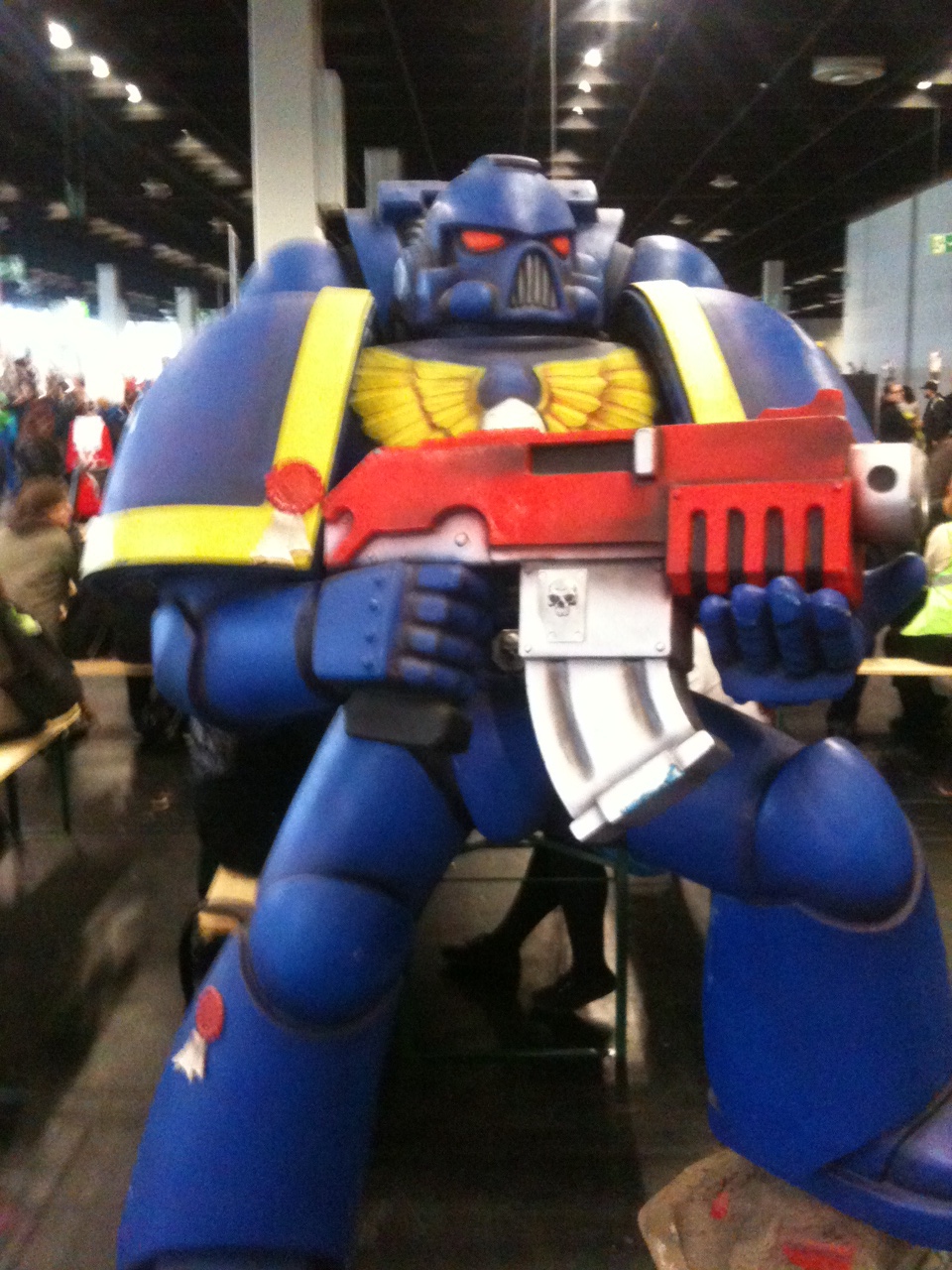
They shall know no fear, at least until they venture into the Wasted Land…
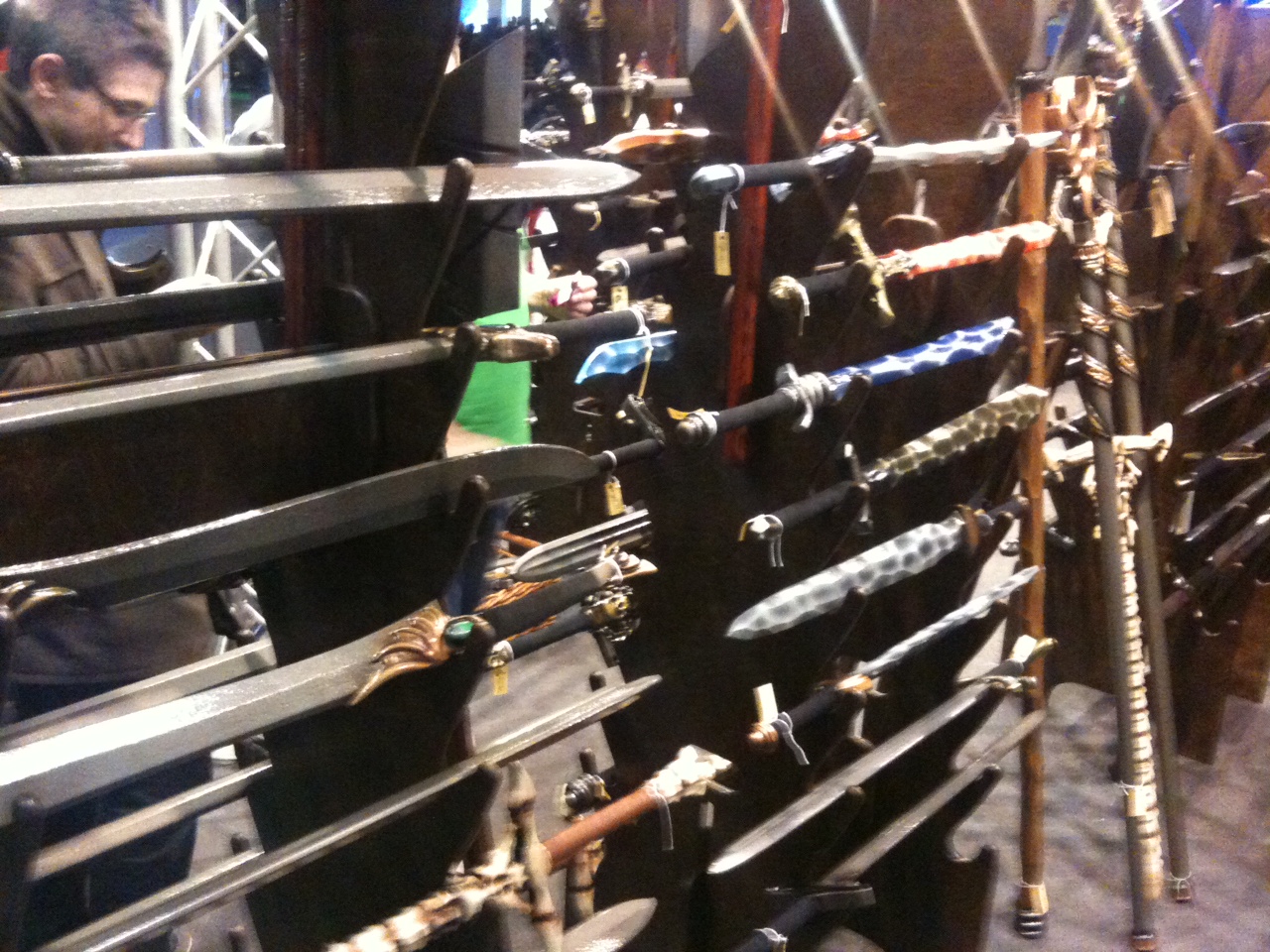
Enough LRP weapons to equip a small (and safe) army.

Run, it’s a goblin and he don’t look happy!
PS. We’ve had a good write-up on the game at Rock paper Shotgun, Lovecraft eZine and Pocket Tactics.
Gaming Malaria
Malaria is a huge killer globally. It is estimated that 1 million people per year are killed by it. It’s a complex problem too; curing it has proven hard but given it is prevalence in parts of the world beset by poverty it has added dimensions of complexity.
Now the idea to gamify the problem is being explored – to crowd-source diagnosis:
A new application that uses crowdsourcing to diagnose malaria is the latest in a continuing trend of bioinformatics being put into the hands of the masses via online gaming.
A team led by Aydogan Ozcan, an associate professor at UCLA, describes its diagnostic game, called BioGames, in a paper “Distributed Medical Image Analysis and Diagnosis Through Crowd-Sourced Games,” which has been accepted for publication in PLoS One.
In the game, players distinguish malaria-infected red blood cells from healthy ones by viewing images obtained from microscopes.
Before the game begins, each player is given a brief online tutorial about what malaria-infected red blood cells look like. After completing training, players are presented with multiple frames of red blood cell images and can use a “syringe” tool to “kill” the infected cells one-by-one and use a “collect-all” tool to designate the remaining cells in the frame as “healthy.”
(Hat-tip to Daniel for the link)
Cave of Forgotten Dreams
I watched this documentary recently:
It was fascinating. The central cave art that the film is about is stunning. I have seen lots of images of cave art before (and I’m interested in it) but the placing of the art in context was very revealing! Recommended.



 A Great Becoming...