Game Controllers that Feedback
A prototype video game controller that tugs on your thumbs as you play could make games feel more realistic by simulating the pull of a fishing line, the recoil of a gun or the feeling of ocean waves.
The new controller, created by researchers at the University of Utah in Salt Lake CIty, features the typical pair of thumb joysticks found on an Xbox or PlayStation controller but at the centre of each stick there is also small “tactor” which moves beneath the player’s thumb to mimic a variety of motions. For example, the team created a fishing game in which the tactors indicate the pull of a caught fish or move from side to side to simulate a swaying ocean.
The rumble in a controller has been with us for some time now, and is an effective haptic feedback system for a game. I’m playing Dead Space 2 at the moment and the buzzing of the PS3 controller at key points really add to the vibe of the game. However it does not always work out; I remember working on integrating a ‘force feedback mouse’ for the PC title Abomination, back in the day; nice idea but didn’t work in practice. Controllers have been a major source of innovations for the games industry over the last fee years; the iOS touch screens, Kinect, Wii, Guitar Hero etc and this sound like it could continue this trend.

Markus Montandon, University of Utah, from New Scientist
Learning Brain Science via Games and Gaming
There is a great article on Wired about Wellcome’s latest foray into gaming, Axon:
Most recently it has commissioned Axon, a game that accompanies the organisation’s Brains: The Mind as Matter exhibition, which starts on 29 March.Axon was developed through collaboration between neuroscientists and games developers Preloaded. The game challenges players to grow their neuron as long as possible; climbing through brain tissue, out-competing rival neurons and creating as many connections to distant regions of the brain as they can.
Martha Henson, Multimedia Producer at the Wellcome Trust, explained to Wired.co.uk: “We sat down with a games design agency, a curator and a neuroscientist and tried to find out what rules govern what happens in the brain, particularly how neurons grow. We then turned those rules into game rules so that in the game the player grows a neuron using the same mechanisms that are used in actual neuron development. The result is a very fast-pace, clicky game with science behind it.”
Now yes, I do a lot of work with Wellcome, so I’m a bit bias but I’ve played the game and it is a great game; never mind all the science stuff; it’s just fun. However it also has great science behind it which makes it doubly cool. The game was the result of locking a brain scientist and some game developers in an a room and not letting any of them out until some great ideas emerged. It’s a good way to make games IMHO 😉
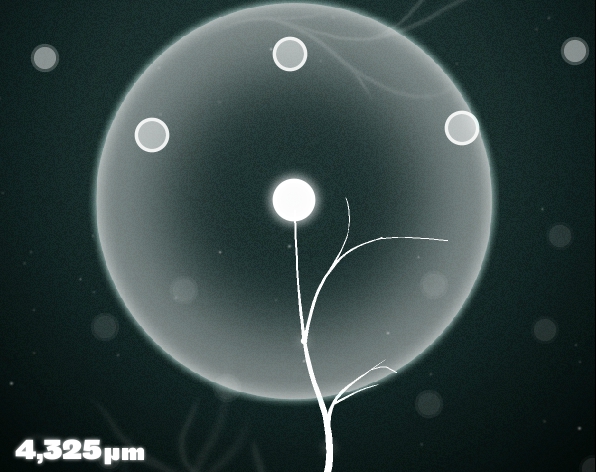
Axon game (Wellcome Trust/Preloaded) browser-based game
Critics Say iPhone Market is Not Working Out for Indies
There is an interesting piece on GamesIndustry.biz about how the iPhone market as a space for selling games is turning out:
Ready at Dawn boss Ru Weerasuriya recently commented to GamesIndustry International that the sector is actually looking more and more like the traditional games business everyday.
And that doesn’t bode well for the era of garage games and independent development on the platform.
“I have a lot of friends working in that environment, and the funny thing is that I know that it’s a great environment to be in because I love playing those games and I know that everybody does. But people have too easy a time thinking that, ‘Well, it only costs this much and we’re gonna make money,’ and it’s not necessarily the case,” he warned.
“Now you see these conglomerates really controlling the biggest and best or most money making titles, which, I don’t know, it’s kind of disheartening a little bit”
Ru WeerasuriyaWeerasuriya continued, “I mean, if you really look at the market, at the thousands and thousands of games that are out there, there’s a very, very, very small percentage of them that literally do make money and their success is only shared by a very few big publishers on that front as well.”
That’s not to say that indies can’t succeed on iOS, but Weerasuriya’s remarks are certainly worth listening to. The App Store is filled with far more failures than successes. Rovio, remember, made over 50 games before striking it rich with Angry Birds.
I agree broadly. The market has got a much tougher place to get noticed in over the last few years and I don’t see that changing at all.
It’s not totally the same as the older models, because the openess of the platform to newcomers means those at the top have a much more precarious grip on their position now than they would have had over the physical games market when the cost of publishing kept indies out. That said the ‘goldrush’ of apps into the market – over 300 per day does make it hard to both get noticed (as a developer) and find the sort of games you like (as a gamer). It is hard to know what an answer might be for the discover-ability problem; perhaps indie developers banding together to pool marketing costs so as to collectively make more of an impact?
The Value of Your #Twitter Followers
There was a recent political kerfuffle over the use of the Mayor of London’s twitter account:
Labour claimed the decision to migrate the official mayoral Twitter account, set up in May 2008 and managed by the publicly funded Greater London Authority, to support Johnson’s re-election bid was potentially a misuse of resources, and swiftly referred the matter to the GLA’s monitoring officer.
Johnson’s team initially argued that the account was owned by Twitter, not the GLA, and claimed it was Johnson’s popularity that had attracted the followers to the account in the first place.
Within hours, Johnson’s campaign issued a statement saying that in light of the “hysteria” caused, the Tory candidate would no longer use the account for election purposes, although the @BorisJohnson name remains.
The account was set up after Johnson was elected and was briefly called @BorisJohnson, but within a few weeks the mayor decided to change to @MayorofLondon, according to Johnson’s team.
A campaign spokesman said the decision to change the account name back to Boris Johnson had been done in the interests of transparency. “As he entered the campaign he was determined to ensure there was no confusion between him as mayor and him as a candidate, and therefore changed the name of his Twitter account.
There is a really serious point here. Lots of people are going to be running Twitter accounts as part of their work. Now if that account is an official one as part of your job, the ownership is clear. However if you’ve set it up on your own initiative and are using it partly for work and partly for your own interests; I can see a grey area developing. How many of the people following you are doing so because of your position or because of you? How much of the time spent updating is is on work time? The classic example of such a row is the PhoneDog row:
In October 2010, Noah Kravitz, a writer who lives in Oakland, Calif., quit his job at a popular mobile phone site, Phonedog.com, after nearly four years. The site has two parts — an e-commerce wing, which sells phones, and a blog.
While at the company, Mr. Kravitz, 38, began writing on Twitter under the name Phonedog_Noah, and over time, had amassed 17,000 followers. When he left, he said, PhoneDog told him he could keep his Twitter account in exchange for posting occasionally.
The company asked him to “tweet on their behalf from time to time and I said sure, as we were parting on good terms,” Mr. Kravitz said by telephone.
And so he began writing as NoahKravitz, keeping all his followers under that new handle. But eight months after Mr. Kravitz left the company, PhoneDog sued, saying the Twitter list was a customer list, and seeking damages of $2.50 a month per follower for eight months, for a total of $340,000.
PhoneDog Media declined to comment for this article except for this statement: “The costs and resources invested by PhoneDog Media into growing its followers, fans and general brand awareness through social media are substantial and are considered property of PhoneDog Media L.L.C. We intend to aggressively protect our customer lists and confidential information, intellectual property, trademark and brands.”
There is more legal discussion of the case here, which is still ongoing. However both stories show that there is confusion here as to who owns a Twitter account when push comes to shove…
The Profile of a Gamer
I’m trying to figure out the profile of the average gamer. In an ideal world I’d not bother because the unifying thing about a gamers is just that they play games. It’s a little unfair to lump people into a profile beyond that (because we’re a diverse group), but for various reasons, it does help to understand a gamer. So this has been my journey of trying to profile a gamer (of which I’m one)…
Originally ‘gamer’ was used to describe people who played paper role-playing games but the term has broadened as the video games has grown, into a term to identify people who are fans of playing computer games. As a categorisation this is a new phenomena and so understanding its boundaries is an uncertain subject yet there clearly exists a group within society who identify with this tag. While there is still debate over what gamers are (and are not) but emerging findings suggest that they are not the lonely figure as stereotyped in other media forms but are very social, often helping others within their arena and also influencing the media consumption of others around them.
– A gamer can be further sub-categorised into forms such as ‘Casual’ or ‘Hardcore’.
– Gamers tend to be younger (the younger the age group, the more of them play games)
– About 25% of UK adults can be considered ‘gamers’.
– The vast majority use Facebook to both communicate and play games (86% of US gamers according to one survey, I expect this to be the same here too, especially as the age group gets younger, the number using Facebook grows again.

Games....an excuse to show a screenshot from the ace, Wonderboy in Monster Land...
Machine Design: AI Designs a Computer Game
Wow! I’m going to be out of a job soon as HAL900 and Wintermute takes over… How the AI made a game is from the very interesting New Scientist special ‘Better Living Through Games‘ which is work a look!
Angelina [the AI] creates games using a technique known as cooperative co-evolution. The system separately designs different aspects, or species, of the game. InSpace Station Invaders – in which players control a scientist who must fend off rogue robots and invading aliens to escape a space station – the species include the layout of each different level, enemy behaviour and the power-ups that give a player extra abilities. Angelina creates a level by randomly selecting from a list, then scattering enemies and power-ups throughout the level. Enemy movements and combat behaviours are also randomly selected from a list, while the effects of the power-ups are also random.
You can have a go at it here.
Congratulations to Opposable Games
New Bristol games start-up, Opposable Games, just won a development prize for the Antix platform (in conjunction with TIGA and the Abertay games Fund). There are a couple of mock-ups online on Nat Alt’s blog:
We can’t wait to move forward with development, here are some concept screens & mockups I did for the pitch:

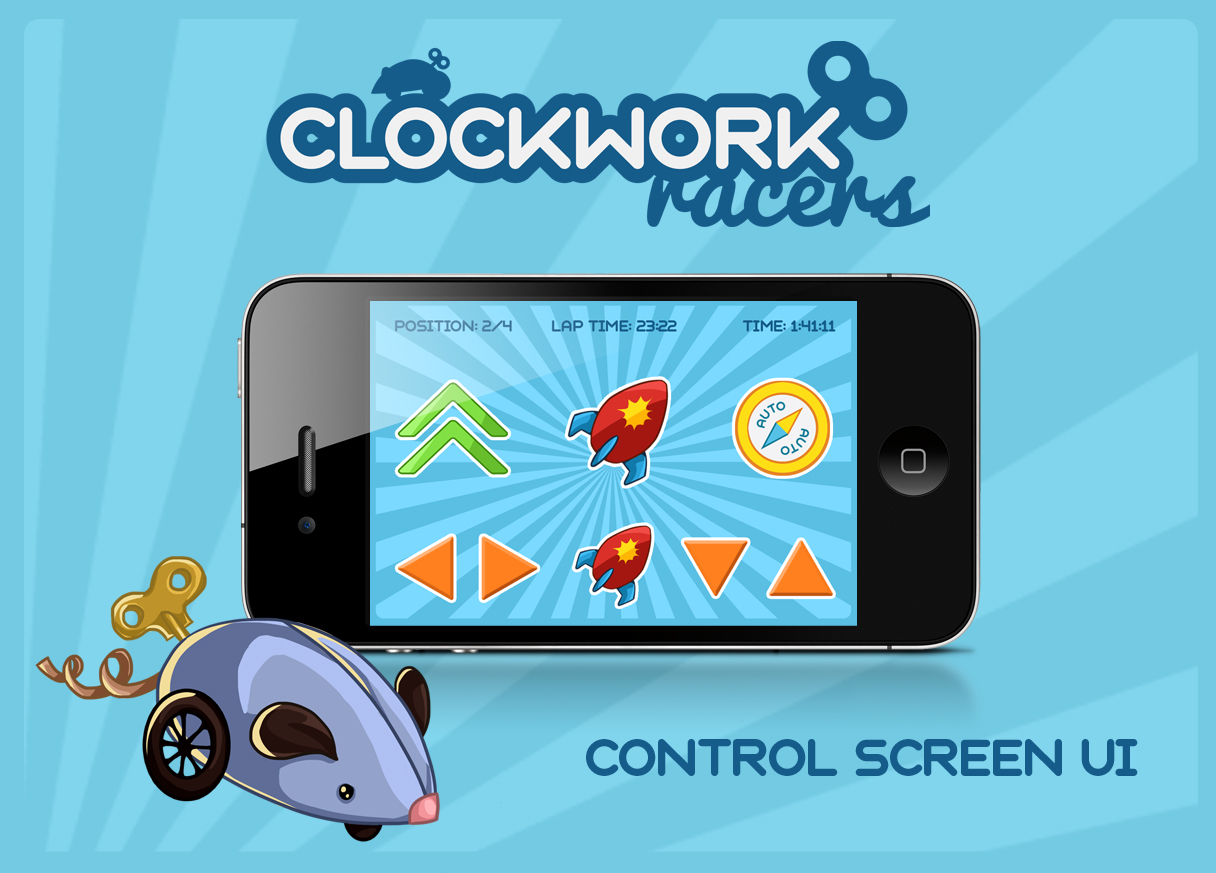
Opposable Games emerged from the games jam we ran in Bristol last year – and it’s really exciting to see how far they have come in such a short time. Definitely one to watch!
Wired’s Geek Dad Reviews Call of Cthulhu: The Wasted Land
Ok, I feel I have to blog this – very chuffed to be reviewed on Wired! Woo!
Today is the 75th anniversary of the death of H.P. Lovecraft, and I can’t help but think that he would be fascinated that his creations still spawn so much interest. And I cannot think of a better way to celebrate his death — it is Lovecraft after all — than losing your mind playing Call of Cthulhu: The Wasted Land. I have to admit that I was totally addicted to this game for weeks, playing on my morning and evening commutes (don’t worry, I take trains), at night before going to bed and any stray moments I could find in-between.
… Call of Cthulhu: The Wasted Land combines the excellent gameplay of the original, with the convenience of playing on an iPad. The game captures the feel of the RPG combat I was used to playing back when we moved painted figures around on gridded maps. Admittedly the figures are now pixel rather than lead, but that saves all of the tedium of having to physically move them and roll dice.
Thanks to Jason for that. Following the review he sent a really ace tweet to me too:
https://twitter.com/#!/JasonSpeaking/status/180359569632006144
And he’d timed the review so it came out on the 7th anniversary of Lovecraft’s death. +25 Geek Chic Points.
https://twitter.com/#!/redwaspdesign/status/180284285138378752
Getting Your Game Noticed: The GTA Method
There is a good article by Stephen Poole in the Guardian on the rise of GTA (he wrote the book Fun Inc, which I’d recommend as a good overview to the games industry). What struck me in the GTA article is how they got people to know about the game, after all the gaming world is littered with great games that nobody either knew about and/or purchased…
Max Clifford was hired to advise on the PR for the game’s 1997 release. Cannily, he advised DMA to feed the tabloids the most outrageous details possible. “It was scary and impressive how he laid out his plan to manipulate the media and the politicians,” Jones says. “It culminated in a two-hour feature on breakfast TV debating the game. At this point, the politicians lambasting the game had not even seen it – I think they were disappointed when they did, given the cartoony look.” The tabloids duly issued calls to ban this sick filth, the British Police Federation said it was “sick, deluded and beneath contempt”, and the game became a hit. Grand Theft Auto the countercultural phenomenon was born.

GTA: Vice City
Strikes me that there is a high risk strategy going on there; if the backlash gets to the point where distribution suffers (a point taken up later in the article) then it can be bad. But if you get enough anger that you get pure hype; then its all sales, sales, sales. Other examples of this include the row over Resistance: The Fall of Man where the church inadvertently helped to hype the game.
Android Market Gets a Revamp as Google Play
The Android Market is no more. Google have decided to re-vamp it into a think they call ‘Google Play‘:
Today we’re launching Google Play, an integrated destination for apps, books, movies, and music, accessible to users on Android devices and to anyone on the Web. As part of this launch, Google Play replaces and extends Android Market — users everywhere can now find their favorite apps and games in Google Play, with other digital content, all in one place.


 A Great Becoming...