Time-Lapse Video of Global Protests
This is an interesting use of mapping – its shows the location and information about the protest, as the creator notes:
The colors are Red: resulting in death, Orange: major injuries, damage, arrests, Yellow: minor injuries, etc. Green: Peaceful…the number of pickets is the size, 1: Under 100, 2: 100-1000 3: 1000-10000 4. 10K – 100K, 5. Over 100K.
Collective Intelligence Means Smarter Working
One of the major things that networked technologies have done is to lower the cost of communication to almost zero. This means that ideas which at one point may have been impracticle due to the distance and/or time/cost of communication are now not only possible, but quite easy. This ease of communication results in a multiplicity of methods from individual-to-individual, peer-to-peer, group-wise, getting and collating data and the like. With all this is mind, it is a natural next step to ask if groups of people working together are smarter or does the group-effect dilute the brain-power of those involved. This interesting blog post looks at research addressing these very questions:
In a fascinating paper published in Science entitled “Evidence for a Collective Intelligence Factor in the Performance of Human Groups” (2010), Dr. Anita Williams Woolley and her colleagues (yes, the research was collaborative!) make two important discoveries:
1. They find that there is such a thing as collective intelligence. What is collective intelligence? Well, it’s the analogue of general intelligence, or IQ, except it exists at the level of the group rather than the individual. What’s useful about IQ – our best measure of an individual’s general intellectual ability – is that it can be used to predict how an individual will perform in a number of different cognitive domains. (That’s why it’s called “general” intelligence!) Using the same basic approach for quantifying individual general intelligence, Woolley et al find that groups exhibit a similar property that is both measurable and allows for accurate predictions of how a group will perform on a range of cognitive tasks.
2. The researchers find some quite intriguing – and counterintuitive – correlations between properties at the level of the individual and the level of the group. For example, one might “pre-theoretically” think that group intelligence is a function of the average intelligence of that group’s members. And one might “pre-theoretically” think that a group with a single exceptional individual would have a higher group IQ than one with, say, three above average but non-exceptional members. However, Woolley and her colleagues find only a statistically weak correlation between the intelligence of groups and these two member-level properties. In other words, it’s not possible to accurately predict how well groups will perform on a range of cognitive tasks simply by averaging the IQs of its members, or by noting a single exceptional individual within the group.
Which is facinating. The collective intelligence of a group is not the average intelligence of the group. Simply gathering together a bunch of smart people does not mean as a group they will be. In many respects this is to be expected. If you look a group-effects such as Groupthink (where the group removes critical thinking by individuals in set areas that conflict with the percieved group aims) or bandwagon effects (where group members tend to follow a lead becase the see others as following it). So the social composition of the group is what is important in harnessing collective intelligence:
What, then, determines how smart a group of collaborating individuals is? The researchers find three individual-level features that correlate in a statistically significant way to collective intelligence.
First, the greater the social sensitivity of group members, the smarter the group. Second, the more turn-taking within the group, the better the group performs. And third, the more women in the group, the higher the group IQ. For any reader who works on projects in groups, this is good information to know! …
I many respects I’ve seen this in action in game development. Projects where we have a good social mix, trust one another and get on well enough to disagree comfortably produce far better outcomes and either keeping people in silos or deaming allegiance to some percieved group aim. Getting this balance right is tough – and in games development the last point about how women improve the group I think is key to its future sucess as a industry. This is a positive bit of reasearch that shows how we can work better, together.
(Also posted on the P2P Foundation Blog.)
Control Design in Crysis and Crysis 2
If you’re a regular reader of this blog then it will come as no surprise that I’m interested in the iteration of software projects – version 1 going into 2 and so on. I’m also into games – so its a double-helping of interest for me to look at iterations of games. I picked up Crysis recently and have been playing though. Crysis is a first-person PC game with a sci-fi setting where the player in enmeshed in a nano-suit that endows the player with the ability to call up special abilities such as stealth and armour. I’ve also picked up Crysis 2, the sequel and this time for Playstation 3. What is interesting is to compare the two as designed objects to look for points of interest. Here’s a screenshot from Crysis on PC:

Crysis on PC
In the bottom-left is the map and the bottom-right is the player status information. Looking first at the bottom-right you can see two bars – a blue one and a green one. The blue one is the suits energy. In Crysis the default suit power option is armour on, so when you are hit you take less damage. If you switch to other options (speed, stealth) then the armour option is off and you’ll take more damage if hit. So when you, say, go into stealth mode the blue energy bar depletes rapidly as the suit’s energy depletes. The other bar (green) is your health; when you take damage this drops down. Its a pretty good system except that in many cases you tend to stick to armour on as its the easiest way to play. Switching modes (via the mouse wheel) is easy, but still not as easy as just shooting.
Now on to Crysis 2. Here’s the PS3 screen:

Crysis 2 PS3 Screenshot
Again the bottom-right shows us the player status information. Except that now there is only one bar – suit energy. There is no armour mode as default. The armour has been separated out from being a background option to a energy-eating R2 function. This means that to go into armour mode is a cost and not something you want to do all that often. On the surface this sounds bad, but its not. Going into armour mode becomes a gameplay function – something active rather than default to. For example when the enemy throws a grenade near you, a quick flick into armour mode and the damage done is minimised. The other advantage of moving the armour function out of the default is the special functions of the suit can be layered – so I can use super-jump while in stealth, whereas in Crysis they were only applied one at a time, in conjunction, provided I’m prepared to take the energy cost.
There are other cool things too from version 1 to 2. Stealth is much improved as refinements in the energy use of stealth mode so it uses goes up as you move as opposed to if you are still which makes it a much better gameplay device. It also feels more natural for a stealth mode; reward the player for slow, cautious movements whereas in Crysis the energy loss was uniform encouraging you to rush around more.
The other thing I love is 3D-ing of the HUD and the motion-movement you get on the whole HUD, as if it is a display in your helmet. This was not in Crysis – it’s a small thing but one that helps to build the realism of the game. Have a look in this video:
My point to all this is that Crysis 2 is much improved on Crysis. Not to run down Crysis – the point is that the improvements are build on the back of the first game, the experience of making it and the player feedback. Credit to EA for sticking with it and allowing it to develop. I’m hoping this feedback loop staying in effect – ‘cos if it does Crysis 3 is an instabuy!
Cthulhu Thursday: Under Your Skin
Tattoos – either love them or hate them, but a common part of human culture. I’ve got 3, so no prises for guessing that I like them, so I was pleased to see this article about Cthulhu themed- tats!

That is an amazing tattoo! Good work that minion! Special mention to this one:

Would getting an Elder Sign tattoo save you when the end times come? Discuss…
(Cthulhu Thursday is a dose of Mythos to brighten darken your week. More on the idea can be found here and a list of posts thus far, here. Also for more Cthulhu news, sign up to the cthulhuHQ twitter feed. Enjoy!)
Are you a Gamer?
Gamer. Its one of those tags that can be uncomfortable, or fun, depending on where you see and what you see from where you sit. I’m a gamer. I’m not the most hardcore gamer I know. (I’m killed way too often on Modern Warfare 2 to claim that). But I’m also a casual gamer. I play a lot of iPhone games. The audience for games has grown hugly over the last few years, yet many of the newcomers to games don’t think of themselves as gamers:
And [because the mass market see gamers as PS3/xbox360 owners playing first person shooters] makes me think that the casual, mass-market gamer will *never* classify themselves as a gamer. In the same way that I watch movies but wouldn’t call myself a film buff.
In short, the mass market will never be gamers.
But they will all play games.
Which is a good point. My wife does not consider herself a gamer and yet I think if you added up all the time she plays games on her iPhone, its probably about the same as me. Its just she’s playing Flowerz and I’m playing Crysis 2.
It all makes me think of Kevin Butler’s impassioned speech at E3 asking us gamers not to ‘hate on’ the casual gamers.
3DS Is Out
Face it, the Gameboy, then the GBA, then the DS were amazing gaming platforms. But it’s the post iPhone world… Here’s the 3DS:
3DS is a much more powerful console than its predecessor, but its key selling point is, naturally, its ability to display glasses-free 3D. The effect is startling: the wide-eyed stares and even wider grins featured in Nintendo’s marketing feel like a genuinely plausible reaction to that initial viewing. It can take time to get used to, though – initial common complaints range from mild eye strain to gentle nausea – so the ability to dial the effect down or turn it off entirely is a welcome one at first. … Installed software allows users to take low-resolution 3D photos and listen to music and an SD card is included to boost the limited internal memory. Rumours of short battery life haven’t been exaggerated: with 3D and wireless communications turned on, it can be just three hours before the console needs recharging via the provided cradle, though playing older and less graphically intensive games extends that time. … Other features are designed to encourage users to carry their console at all times. A built-in pedometer awards Play Coins, an in-game currency set to be used by a number of first- and third-party titles, while SpotPass and StreetPass wireless communications allow 3DS owners to swap data, including their Mii avatars, with their consoles in standby mode.
All About the Filth Fair Game
Filth Fair is a great little word puzzle game that I’ve been producing for the Wellcome Trust to tie in with their Dirt season. It’s been developed by Toytek. The game is for iPad, iPhone, iPod Touch and the Web (as a Flash game). Here’s a screenshot from the game:

Filth Fair Screenshot
There are lots more images here. The best way to see the game is to play it!

Filth Fair Web Version

Download Filth Fair for iPhone, iPod Touch or iPad
There is also a Facebook fan-page here, http://on.fb.me/filthfair. The aim of the game is to find and uncover 331 hidden words from within a huge (and real, not digital) detailed and amazing painting by cult artist Mike Wilks.
Below is a preview trailer for the game:
And some fun blurb written for the game:
Roll Up! Roll Up! The Filth Fair is Coming to Town!
For many months now Wellcome and Toytek have been building an experience that explores the issue of ‘Dirt’. Yes, Dirt! As part of the upcoming season by the Wellcome Trust, a veritable cornucopia of delights especially prepared for your delectation and amusement (and disgust!) is currently under construction. Once completed in March this year, the Filth Fair game will be unleashed to infect the delicate sensitivities of gentle-folk. This game takes the form of an “eye Pad”, “eye Phone” or “eye Pod Touch” iPad, iPhone and iPod Touch and also telegraphonic web game of hidden words and meanings. Central to this gaming experience is a huge painting by Mike Wilks, a noted and famous artist for his 1886 1986 bestselling book ‘The Ultimate Alphabet’. This game has over 300 hidden words buried in objects. The player’s task is to find and identify all the words. It can be done via cryptic clues, descriptive clues or word-substitution. Prizes and awards, not to mention acclaim, awaits those who can identify all of the objects within the Filth Fair. Entrance to the Filth Fair will be free! Visitors are advised to bring an active curiosity and a strong stomach.
Also of interest to the many visitors is the display of craftsmanship that has gone into the creation of the Filth Fair. The central painting is not some digital-virtual hocus-pocus – oh no! The central painting is a real painting, painted by a real painter! Oh yes, this marvel has been rendered using non-digital paint on a non-virtual canvas in a real London studio. Be ready to marvel at the “real made digital” before your very eyes!
Those curious to see the many sights and puzzles of the Filth Fair and those wishing to compose strong disapproving letters to their local newspaper about it’s imminent arrival are advised to follow the Wellcome “Twitter” musings http://twitter.com/wellcometrust and/or to sign up to the “Face Book” page; http://on.fb.me/filthfair
Previews
We had previews in Gamezebo, Pocket Gamer, 9cheats.com, ursegames.com, Touchaholics and Metro:

Filth Fair in Metro
Making of Filth Fair Video
We also produced a short film about the creative process going from a physical paintning by Mike Wilks to a digital game. This was featured by Pocket Gamer, Design Week and on the Wellcome Collection site. Here is the video:
Post-launch
Once the game came out, a few rejections by Apple over content while getting passed became news about the app (and also here too). We also got reviews at Gamezebo and on 148apps. There is also a big article about the game at the Wellcome blog, looking at how the idea came to be:
We wanted to create game that everyone could explore at their own level, and looked long and hard to find the right people with the right approach. What emerged from this process is a puzzle/trivia word game developed by Guildford-based developers Toytek. They had already received a degree of acclaim for their work on The Ultimate Alphabet app, so we took the core idea for this game and made it, well, dirtier.
The final result is an amazing central image, which comes from a real painting by cult artist Mike Wilks. The richness of the image meant that we could place objects in the image that were also in the exhibition, so linking the two experiences. Mike took ideas and objects from the Wellcome Library (including objects that are in the Dirt exhibition) and worked them into a collage of themes and colours. Being able to make these part of a game is especially nice because much of the content we consume nowadays is created and delivered in the digital realm.
Straight after launch the game went to No.1 in the US iTunes Store for Education and Trivia. In the UK it was 24 and 13 for the same categories. It got a great write up in Design Week:
It’s a captivating image that you could pore over for hours, even without the competitive element, and a great way to get people engaged with the exhibition’s theme and objects.
The Decline of the Commons? Not Really.
Michel alerted me to this post provocatively entitled ‘The Decline of the Commons, 1760 to 2000, as Plotted by Google‘. It looks as an interesting search engine Google have developed that looks though millions of books for words and gives you a graph of their use over time. So the post author put in the word commons and got:

The implicit conjecture that this result, the decline of the use of the word, may also mean the decline of the idea is in no way accurate. This tool could be used to track ideas, yes. But more than that it tracks the language we use to express ideas. So what we mean by ‘commons’ has developed, expanded and diversified over time to include ideas like ‘open source’, ‘free software’ and ‘peer-to-peer’. You’d need to aggregate all the words and terms used to track the idea and this post does not do that. Now that would be an interesting result…
(Also posted on P2P Foundation blog too)
Stuck with a Problem? Ask Nature!
I’ve been doing the occasional post under the ‘Technologies inspired by nature’ banner. But it seems that there is a much better resource that my occasional musings (who knew!!?) the very interesting looking AskNature:
Imagine 3.8 billion years of design brilliance available for free, at the moment of creation, to any sustainability innovator in the world.
Imagine nature’s most elegant ideas organized by design and engineering function, so you can enter “filter salt from water” and see how mangroves, penguins, and shorebirds desalinate without fossil fuels.
Now imagine you can meet the people who have studied these organisms, and together you can create the next great bio-inspired solution.
That’s the idea behind AskNature, the online inspiration source for the biomimicry community. Think of it as your home habitat—whether you’re a biologist who wants to share what you know about an amazing organism, or a designer, architect, engineer, or chemist looking for planet-friendly solutions. AskNature is where biology and design cross-pollinate, so bio-inspired breakthroughs can be born.
Basically you can search the free and open source site to find answers to problems that nature has already evolved a solution too. For example: Staying warm when it’s cold. I was going to Ask Nature how to stop runaway global warming, then realised it had a solution – to lock lots of the carbon up in the earth and only release it a bit at a time…Ooops.
Risk on the iPhone
I love the game Risk, its a great example of a well designed game. Built in to the gameplay is the balance that as your forces advance, they loose strength territory by territory. Plus the Risk Cards offer the chance for upset. Now there is an iPhone version:

Risk on iPhone
I’ve been playing it a lot… Too much:
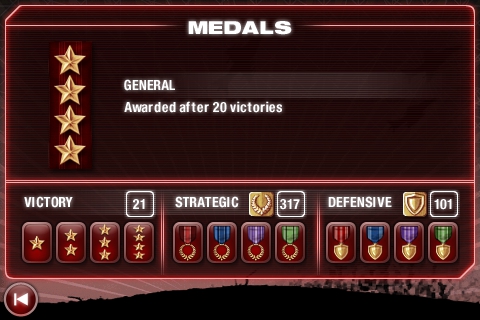
My Medals Screen
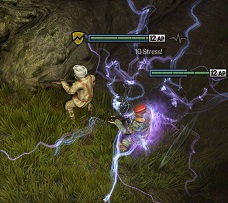


 A Great Becoming...